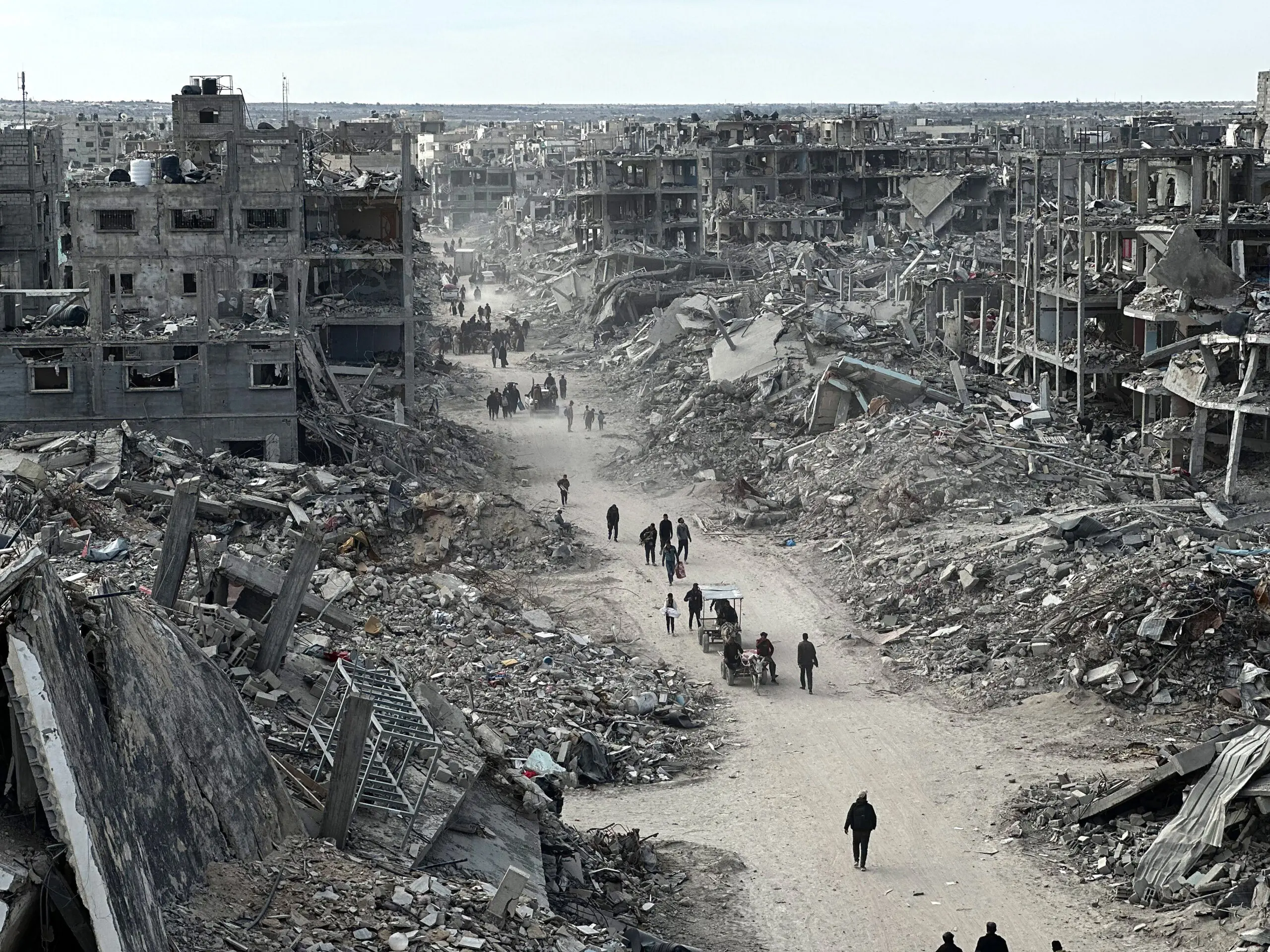
Since the ceasefire in the Gaza Strip took effect on October 10, 2025, Israeli forces have continued to carry out frequent attacks across the enclave, resulting in hundreds of Palestinian deaths.
According to Gaza’s Government Media Office, Israel committed at least 3,795 ceasefire violations between October 10, 2025 and July 19, 2026. The reported violations included air strikes, artillery shelling, direct gunfire and other military activity. The office also said Israeli forces detained 149 Palestinians from Gaza during this period.
Between October 10, 2025 and April 14, 2026, the Government Media Office recorded 921 incidents of Israeli forces opening fire on civilians, 97 incursions into residential areas beyond the “yellow line”, 1,109 incidents of bombing and shelling, and 273 cases involving the demolition or destruction of Palestinian property.
Restrictions on humanitarian assistance have also continued, while homes and critical infrastructure across Gaza have suffered further destruction.
Al Jazeera has been tracking reported violations of the ceasefire since the agreement came into effect.
What does the ceasefire agreement require?
On September 29, 2025, the United States presented a 20-point proposal aimed at ending the war in Gaza, securing the release of the remaining captives, increasing humanitarian assistance entering the territory and establishing a three-stage withdrawal of Israeli forces.
Among the main provisions of the first phase were:
Ending hostilities between Israel and Hamas in the Gaza Strip.
Allowing humanitarian assistance to enter Gaza without Israeli restrictions or interference in distribution.
Releasing all Israeli captives held in Gaza, both living and deceased.
Releasing about 2,000 Palestinian prisoners and detainees held by Israel.
Withdrawing Israeli forces to the designated “yellow line”.
Following mediation involving Egypt, Qatar and Turkiye, representatives from nearly 30 countries gathered on October 13 for a ceremony marking the Gaza ceasefire agreement, led by US President Donald Trump.
Neither Israel nor Hamas attended the ceremony, however, raising questions about the agreement’s long-term implementation and whether it could resolve the wider issues surrounding the war, occupation and blockade of Gaza.
Israel has maintained its opposition to the establishment of a Palestinian state, while the United States has continued providing Israel with military and diplomatic support.
Israeli attacks reported on most days of the ceasefire
An Al Jazeera analysis found that Israeli attacks were reported on 282 of the first 316 days of the ceasefire.
That means only 34 days passed without reports of violent attacks, deaths or injuries.
Despite the continued violence, the United States has maintained that the ceasefire remains in effect.
Palestinians continue to be killed
Since the ceasefire took effect at noon on October 10, Israeli attacks have killed at least 1,283 Palestinians and injured 4,248 others, according to figures from the Palestinian Ministry of Health in Gaza.
Two particularly deadly escalations occurred on October 19 and October 29, when a combined 154 Palestinians were killed.
On October 19, Israel accused Hamas of violating the ceasefire following the deaths of two Israeli soldiers in Rafah. Israeli forces subsequently launched a major series of air strikes across Gaza that killed 45 Palestinians.
Hamas’s armed wing, the Qassam Brigades, said Israeli forces controlled the area where the soldiers were killed and maintained that it had no contact with Palestinian fighters there.
Ten days later, on October 29, Israel launched another major wave of attacks after an exchange of gunfire in Rafah left one Israeli soldier dead.
At least 109 Palestinians were killed, including 52 children.
US President Donald Trump defended Israel’s response at the time, describing the strikes as retaliation for the soldier’s death.
On November 22, Israeli drone and missile attacks across northern and central Gaza killed at least 21 Palestinians and wounded dozens more.
According to the latest figures from Gaza’s Ministry of Health, covering the period from October 7, 2023 through August 21, 2026:
Confirmed killed: At least 73,417 Palestinians, including about 21,500 children.
Injured: At least 174,360 Palestinians.
Humanitarian aid remains severely restricted
One of the central conditions of the ceasefire was that humanitarian assistance would be allowed to enter Gaza at full scale.
Figures released by Gaza’s Government Media Office indicate that the amount of aid entering the territory has remained far below the agreed level.
Between October 10, 2025 and July 19, 2026, the office said 59,613 trucks entered Gaza out of approximately 168,000 that were expected.
That represents roughly 35 percent of the allocated number of trucks.
Truck drivers have also reported lengthy delays at Israeli inspection points, slowing the movement of humanitarian supplies into the territory.
Israeli restrictions have reportedly affected the entry of essential and nutritious food products, including meat, dairy products and vegetables. At the same time, items such as snacks, chocolate, crisps and soft drinks have continued to enter Gaza.
Has Hamas returned all Israeli captives?
On October 13, Hamas released the remaining 20 living Israeli captives as part of the ceasefire agreement.
In exchange, Israel released 250 Palestinians serving long prison sentences and about 1,700 Palestinians detained since October 7, 2023.
The agreement also required Hamas to return the bodies of 28 Israeli captives in exchange for the return of 360 Palestinian bodies held by Israel.
Israel has since returned more than 300 Palestinian bodies. Palestinian medical officials said a number of the bodies showed signs of severe mistreatment and alleged torture, while many could not immediately be identified.
By December 26, 2025, Hamas had returned the bodies of all 28 Israeli captives covered by the agreement.
Despite the exchanges and the formal ceasefire, repeated Israeli attacks, continued Palestinian casualties and restrictions on humanitarian assistance have raised growing questions over how effectively the agreement has been implemented on the ground.

Comments 0
No comments yet. Be the first to share your thoughts!